
I still remember sitting in my old rental apartment, shivering under three layers of blankets while staring at a utility bill that made absolutely no sense. I was cranking the thermostat, but the air stayed ice-cold, and I felt like I was literally burning cash just to stay miserable. Most people think you need to hire an expensive engineer with a degree and a massive budget to figure out why your house is freezing, but that’s a total myth. You don’t need a complex laboratory setup to understand heat loss measurement; you just need to know where to look.
I’m not here to sell you on expensive, high-tech gadgets that you’ll never use. Instead, I’m going to show you how to use basic, practical methods to pinpoint exactly where your home is failing you. We’re going to cut through the jargon and focus on real-world tactics that actually lower your bills. My goal is to give you the data you need to stop the leaks, reduce your footprint, and finally take control of your energy costs without breaking the bank.
Table of Contents
Mastering Building Energy Audit Methods on a Budget

You don’t need a professional crew with a massive budget to start identifying where your home is failing you. I’ve found that the most effective building energy audit methods often start with just a bit of curiosity and some basic tools. If you’re like me and prefer a DIY approach, start by performing a visual inspection during a cold snap. Look for drafts around window frames and door seals; this is the most direct way to see conduction and convection loss in real-time. If you can feel a breeze, you’re literally watching your money drift away.
For a more data-driven approach, I highly recommend investing in a basic handheld infrared thermometer. It’s a game-changer for thermal bridging identification. By scanning your interior walls, you can spot “cold spots” that indicate where insulation might be thin or missing entirely. You aren’t looking for perfect laboratory data here, but rather patterns. These temperature anomalies tell you exactly where your thermal insulation efficiency is dropping, allowing you to target your repairs precisely rather than guessing and wasting money on fixes that don’t actually move the needle.
Spotting Conduction and Convection Loss Before They Drain You

To really get a handle on your energy leaks, you have to understand the difference between heat moving through materials and heat moving through the air. Conduction is the silent killer; it’s when heat travels straight through your walls or windows because your insulation is failing. I often use my handheld thermometer to find thermal bridging identification points—those specific spots where a structural element, like a wooden stud or a metal frame, acts as a highway for heat to escape. If you feel a cold patch on a wall even when the heater is on, that’s conduction at work, and it’s essentially a hole in your wallet.
Convection is a bit more chaotic. This is about air movement—drafts pulling warm air out and sucking cold air in. You might notice it near window frames or poorly sealed electrical outlets. While professional infrared thermography techniques can map these air currents visually, you can often spot them yourself by watching how a candle flame flickers or by simply feeling for that telltale chill. Once you identify these patterns, you stop guessing and start fixing.
My Quick-and-Dirty Checklist for Finding Heat Leaks
- Grab a cheap handheld infrared thermometer; I use mine constantly to scan window frames and door jambs for those telltale cold spots that scream “energy leak.”
- Light a stick of incense or a candle and move it slowly around window seals and electrical outlets to see if the smoke flickers—if it does, you’ve found a draft.
- Check your attic hatch and recessed lighting; these are massive convection highways that let your expensive warm air bypass your living space entirely.
- Inspect your exterior walls during a cold snap to see if they feel unusually chilly to the touch, which usually points to poor insulation or a thermal bridge in the structure.
- Don’t overlook the “invisible” culprits like gaps around plumbing pipes under sinks or behind baseboards; if air can get in, your heat is definitely getting out.
The Bottom Line on Stopping the Leak
You don’t need a thousand-dollar thermal camera to start; use your senses and a cheap infrared thermometer to find the obvious cold spots before you spend a cent on upgrades.
Focus on the “low-hanging fruit” like sealing gaps around windows and doors first, because stopping air leaks (convection) is often more impactful for your wallet than upgrading heavy insulation.
Treat energy efficiency as a way to reclaim your income, not just a way to save the planet—every bit of heat you keep inside is money that stays in your pocket instead of escaping through your walls.
## Stop Guessing, Start Measuring
“You can’t fix a leak you can’t see. Stop treating your heating bill like a mystery and start using data to find exactly where your money is escaping through the walls.”
Tobias Nkemdirim
Stop Guessing and Start Saving
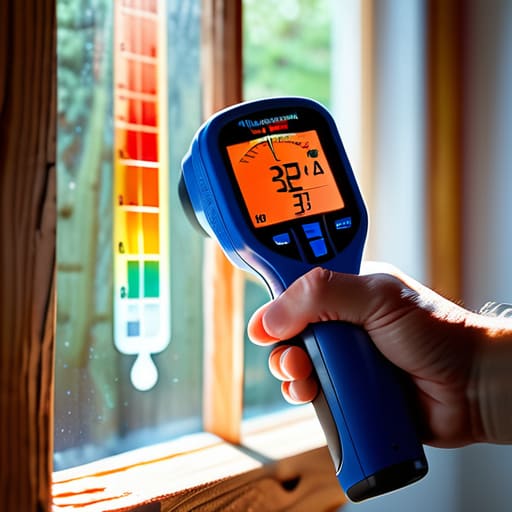
At the end of the day, measuring heat loss isn’t about buying expensive, high-tech gear you saw in a sci-fi movie. It’s about being observant. Whether you’re using my favorite trick of tracking thermal bridges with a handheld infrared thermometer or just feeling for that telltale draft around a window frame, the goal is the same: identifying where your money is escaping. We’ve looked at how conduction pulls warmth through your walls and how convection loops carry it right out the door. Once you stop treating these leaks as invisible and start seeing them as measurable data points, you gain the power to fix them. It’s about moving from guesswork to targeted, actionable repairs that actually move the needle on your monthly bills.
I know it can feel overwhelming, especially when you feel like you don’t have a massive renovation budget to throw at a “green” upgrade. But sustainability shouldn’t be a luxury reserved for people with deep pockets. Every seal you apply and every draft you block is a win for both your wallet and the planet. We don’t need perfect, net-zero mansions to make a difference; we just need to stop being passive about the energy we waste every single day. Start small, stay observant, and remember that every degree you save is a step toward a more efficient, affordable life.
Frequently Asked Questions
Do I actually need a professional thermal camera, or can I get decent results using just my infrared thermometer and some basic DIY methods?
Look, I get the temptation to drop hundreds on a thermal camera, but you don’t need one to start seeing real results. My handheld infrared thermometer is my most used tool for a reason—it’s fast and tells you exactly where the temperature drops are happening. Use it to scan window frames, door seals, and baseboards. If you combine those readings with a bit of common sense and a cheap smoke pencil, you’ll catch 90% of the leaks.
Once I've identified a major heat leak, how do I know if a quick fix like weatherstripping is enough or if I'm looking at a more expensive structural issue?
The best way to tell is to use that infrared thermometer I’m always carrying. If you see a sharp temperature drop right at the door frame or window edge, that’s a draft—weatherstripping or caulk will fix that easily. But if the entire wall feels cold to the touch or shows a massive, consistent temperature gradient, you’re likely looking at poor insulation or a structural thermal bridge. That’s when a quick fix won’t cut it.
How much of an actual impact will these measurements have on my monthly utility bill—is it worth the time spent auditing?
Look, I get the skepticism. It feels like a lot of effort for a few cents saved. But here’s the reality: if you’re ignoring leaks, you’re basically paying to heat the neighborhood. In my audits, I’ve seen people slash their heating bills by 15-20% just by sealing a few drafty windows and fixing insulation gaps. It’s not just about the money, though—it’s about stopping the cycle of wasting energy just because it’s “convenient.” It’s absolutely worth it.
